POWERED by THECREATOR EDUCATION - Cultivating Global Problem-Solvers
Cambridge Curriculum
Cambridge Pathway and Holistic Academic Progression
The Cambridge Pathway is a comprehensive and internationally recognised educational journey designed to support learners from early years to advanced levels. It provides a clear and structured progression through stages such as Cambridge Primary, Lower Secondary, IGCSE, and AS & A Levels, ensuring continuity in learning, skill development, and academic depth across all grades.
Focus on Conceptual Understanding and Skill Development
The Cambridge curriculum emphasises deep conceptual understanding, critical thinking, problem solving, and independent inquiry rather than rote memorisation. It encourages learners to explore ideas, apply knowledge in real-world contexts, and develop analytical and research skills that are essential for success in higher education and global careers.
Flexible and Internationally Benchmarked Curriculum
Cambridge programmes are flexible, internationally benchmarked, and recognised by top universities worldwide. The curriculum allows schools to adapt teaching strategies while maintaining rigorous academic standards, enabling students to develop both subject mastery and transferable skills such as reasoning, communication, and innovation.
Preparation for University and Future Research-Oriented Learning
The Cambridge Pathway is designed to prepare students not only for examinations but also for university-level learning and research environments. Its assessment model promotes application of concepts, evaluation of evidence, and structured problem solving, making it especially suitable for students pursuing advanced studies in STEM and other academic disciplines.
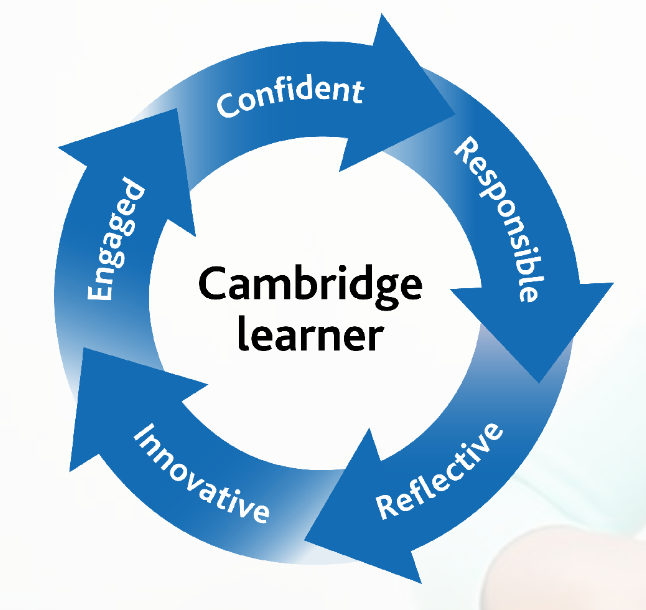
Cambridge Curriculum @ The Creator
The Cambridge IGCSE and A Level curriculum is globally respected for its strong focus on conceptual understanding, analytical thinking, and application of knowledge in unfamiliar situations. Unlike traditional exam systems, Cambridge examinations are fundamentally problem-based, where students are required to apply concepts to completely new contexts rather than reproduce memorised answers.
In Cambridge assessments, most questions are set in novel situations, demanding deep conceptual clarity, logical reasoning, and the ability to transfer learning across different scenarios. This means students cannot rely on rote learning or pattern-based preparation; instead, they must develop true concept mastery to solve problems effectively. Such a level of application is not achievable through conventional chalk-and-talk teaching or passive content delivery. It requires active student engagement through investigation, experimentation, data analysis, and verification of concepts. When students explore concepts through hands-on learning and scientific inquiry, they build the cognitive flexibility needed to handle unfamiliar and higher-order problems.
In many traditional learning environments in India, teaching is largely centred on content coverage through lectures and board work. While this approach may complete the syllabus, it often does not equip students to tackle problem-based examination questions, making Cambridge exams challenging for those trained only through passive learning methods. The Cambridge curriculum and its assessment structure are inherently designed to nurture future researchers in science and mathematics. It promotes deep learning, critical thinking, independent inquiry, and advanced problem-solving skills rather than superficial memorisation.
Recognising these academic demands, we have developed a specialised teaching-learning architecture called Problem-Based Learning with Teaching by Demonstrations and Learning by Experiments (PBL-TDLE). This framework aligns closely with the Cambridge philosophy by ensuring concept mastery through demonstrations, experiments, investigations, and structured problem solving, enabling students to confidently apply their knowledge in new and complex examination situations.
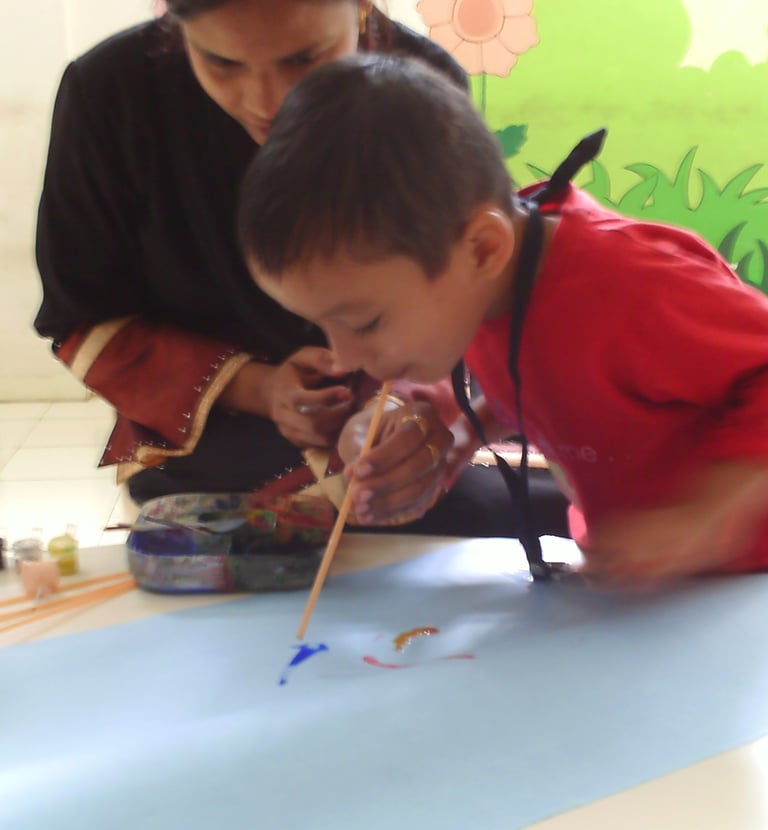
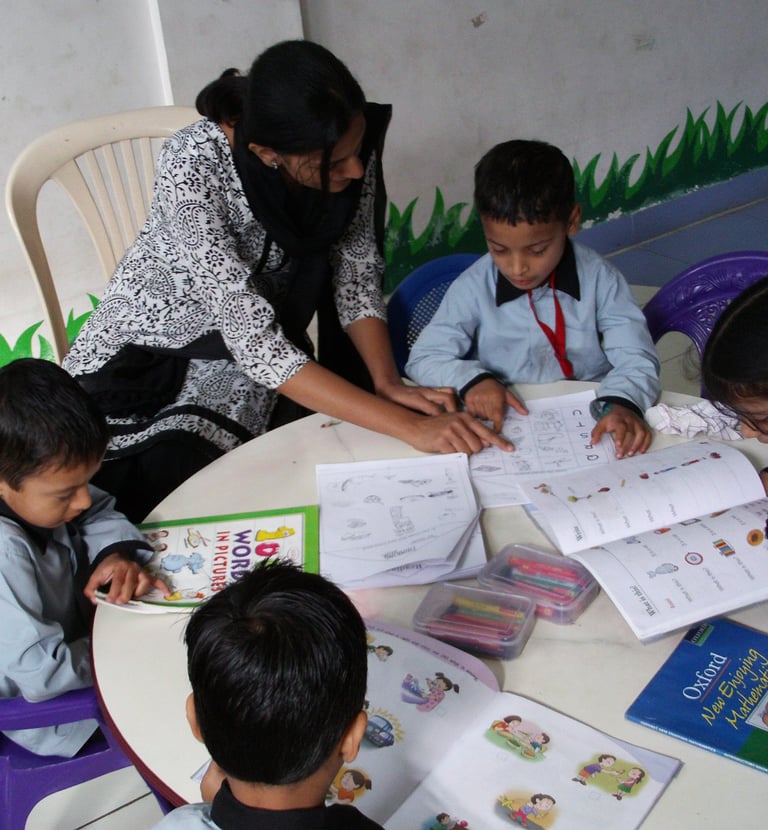
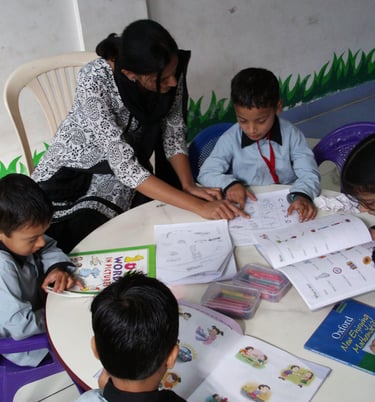
Early Year Program - Pre Primary Program (Age 3 - 4)
Early Years is a comprehensive program designed specifically for children aged 3 to 5. It aims to provide these young learners with the best foundation in life, assisting them in achieving important early milestones and enabling them to succeed both academically and socially. By participating in the Cambridge Early Years program, children are given the opportunity to flourish not only within the school environment but also in their everyday lives. This program serves as the initial step on the Cambridge Pathway, which guarantees a seamless educational journey from the ages of 3 to 19, ultimately leading to long-term educational success. With Cambridge Early Years, children are equipped with the necessary skills and knowledge to excel throughout their academic careers and beyond.


Our office
Near DurgaShakti Foods Pvt. Ltd.
Sajanpuri, Khamgaon, M. S. 444303
Contacts
thecreator.school@gmail.com
9172221415 /16/18

Cultivating Global Problem-Solvers