POWERED by THECREATOR EDUCATION - Cultivating Global Problem-Solvers
Fundamental or Deep Level Learning at The Creator International School
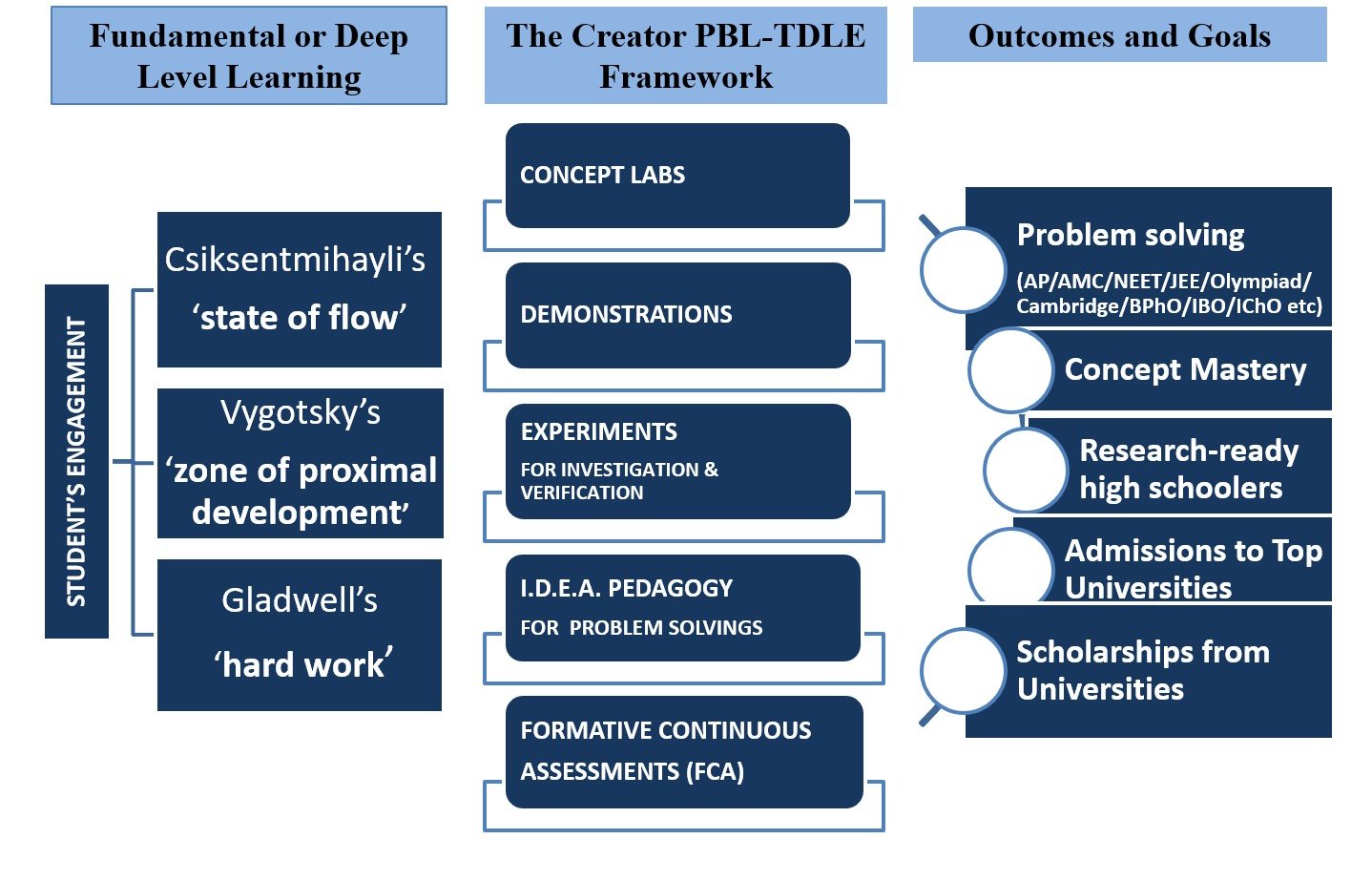
The Creator PBL-TDLE Framework is a complete architecture for deep and fundamental learning built on continuous student engagement, experimental concept development, and structured problem solving. It transforms traditional classrooms into Concept Labs where teaching happens through demonstrations, investigations, and experiments instead of passive content delivery. Students remain actively engaged every minute in higher-order learning, working within guided academic environments that naturally support flow, scaffolded learning, and sustained intellectual effort.
Fundamental Learning
PBL is Fundamental Learning
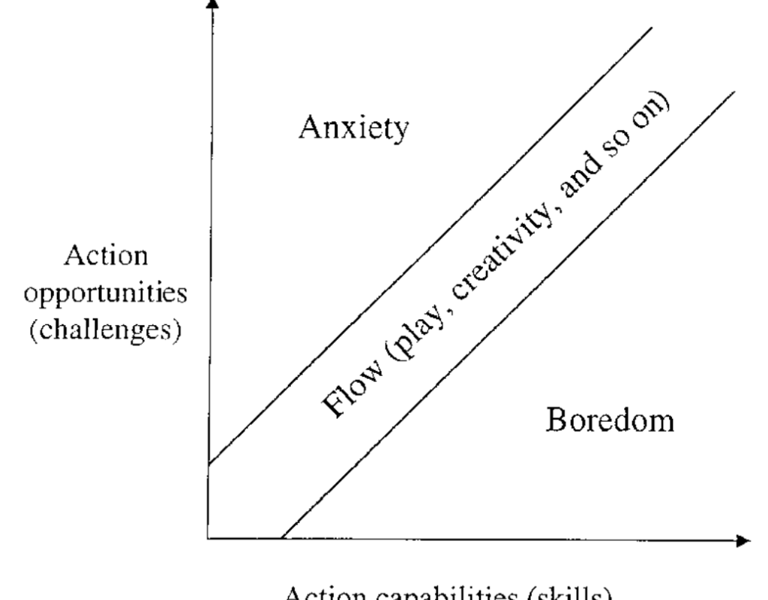
In the PBL-TDLE model, the three core learning principles are systematically integrated into daily classroom practice. The state of flow is achieved through uninterrupted experimental investigations and real-time problem solving that keep students fully immersed in learning tasks. Vygotsky’s zone of proximal development is addressed through guided demonstrations, teacher mentoring during experiments, and immediate correction while students perform investigations, ensuring concepts are developed step by step with academic supervision. The principle of disciplined hard work is embedded through regular measurements, data analysis, graph plotting, calculations, error analysis, and concept verification, making rigorous practice a natural part of everyday learning rather than an occasional activity.
The outcomes of applying the PBL-TDLE framework are clear and measurable: strong concept mastery through experimental verification, daily application of concepts through classroom problem solving, research-oriented thinking, and high-level analytical skills. Students become confident problem solvers capable of handling new and unfamiliar situations in international examinations and real-life contexts. This approach ultimately prepares research-ready learners, supports admissions to top global universities, and enables scholarship achievements by building deep conceptual understanding, independent thinking, and sustained academic excellence.
Fundamental or Deep Level Learning
Deep level or fundamental learning is the outcome we want students to reach.
Fundamental learning means learning that builds strong ideas, skills and ways of thinking that stay with the learner and can be used in new situations.
A simple way to explain it:
Fundamental learning happens when
• the learner truly achieve mastery concepts.
• the concept/idea becomes part of their natural way of thinking
• they can use the concepts to solve new problems
• the learning changes how they see or approach the world
For example
A child who only memorizes and knows the fact that “light travels in a straight line” has surface learning.
But a child who investigate & verifies it using experiments, sees real evidence, explains it in their own words and applies it to shadows, pinhole cameras or eclipses has fundamental learning.
To master the concepts, students must be deeply engaged and actively involved during the learning process.
Involvement is congruent with
1) Csiksentmihayli’s ‘state of flow’, (American psychologist)
2) Vygotsky’s ‘zone of proximal development’
3) Gladwell’s concept of ‘hard work’.
1) Csiksentmihayli’s ‘state of flow’, (American psychologist)
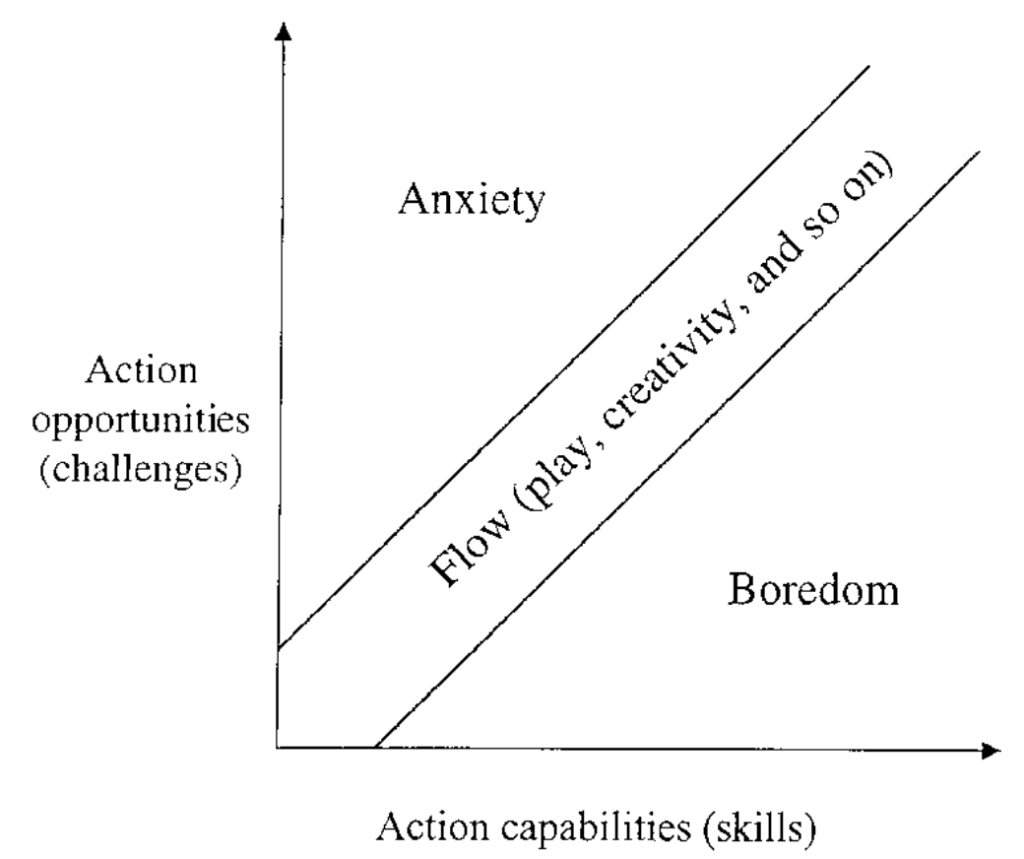
Mihaly Csikszentmihalyi’s flow state, often called being in the zone, is a state of full involvement in an activity. A person experiences deep focus, enjoyment and a loss of awareness of time and self. It happens when strong skills match a high level of challenge. This creates an optimal experience and strong inner motivation. In this state, actions and awareness blend together, goals are clear, feedback is immediate and all distractions disappear, making the activity rewarding by itself.
2) Vygotsky’s ‘zone of proximal development’
Vygotsky’s Zone of Proximal Development is the ideal range for learning. It is the gap between what a learner can do independently and what they can do with support from a more knowledgeable person, such as a teacher, peer or collaborator. The idea highlights the role of social interaction in learning. When learners work on tasks that are slightly above their current ability and receive scaffolding through hints, prompts or demonstrations, they are able to understand and internalize new skills. This support helps them grow cognitively and gradually reach the point where they can perform the task on their own.
3) Gladwell’s concept of ‘hard work’.
Malcolm Gladwell’s idea of hard work, explained in Outliers, focuses on the 10,000 Hour Rule. He argues that mastery comes from long periods of deliberate practice rather than natural talent alone. He also points out that this effort becomes powerful only when it is connected to meaningful work and supported by opportunities, culture and circumstances.
That is why we should do everything we can in order to create an environment in which students can engage in a wide variety of activities.
Our office
Near DurgaShakti Foods Pvt. Ltd.
Sajanpuri, Khamgaon, M. S. 444303
Contacts
thecreator.school@gmail.com
9172221415 /16/18

Cultivating Global Problem-Solvers