POWERED by THECREATOR EDUCATION - Cultivating Global Problem-Solvers
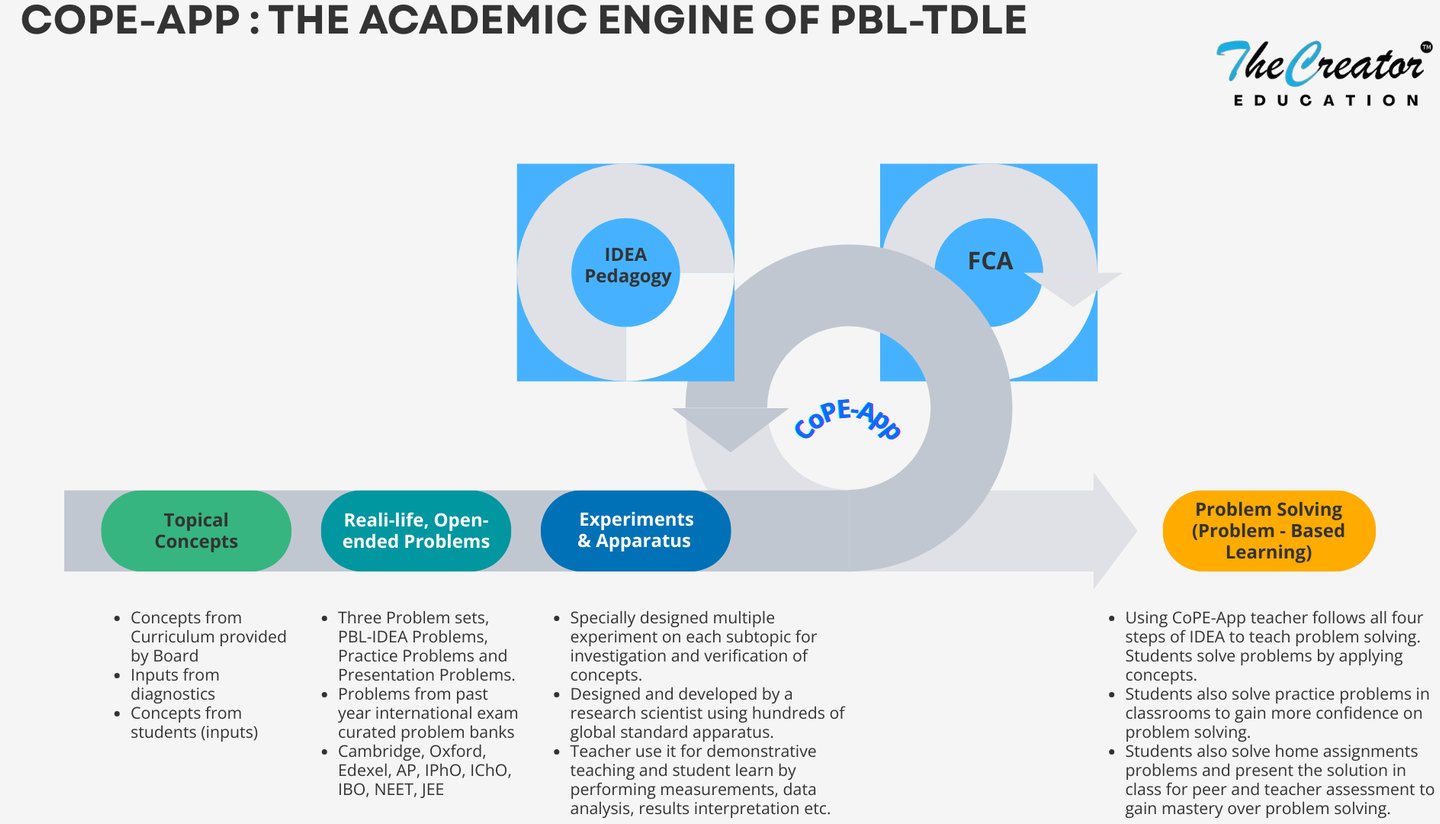
CoPE - App : The Academic Engine
Co - Concepts, P - Problems, E - Experiments, App - Apparatus
CoPE-App is an advanced digital lesson planning and academic execution platform developed exclusively for The Creator PBL-TDLE framework. It functions as a tailor-made lesson planning system based on the conceptual understanding of the whole cohort, integrating curriculum concepts, problem banks, experiments, apparatus, IDEA pedagogy, diagnostics, and assessments into one unified academic engine designed for assured concept mastery.
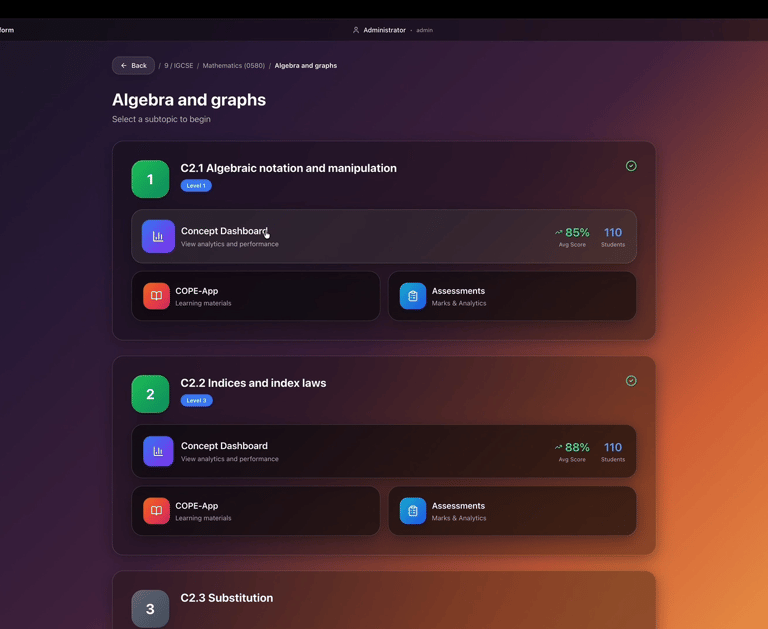
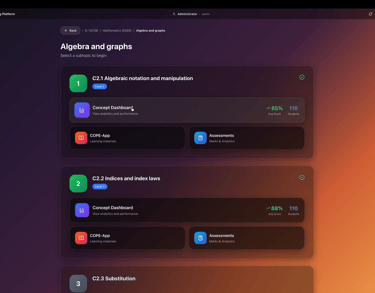
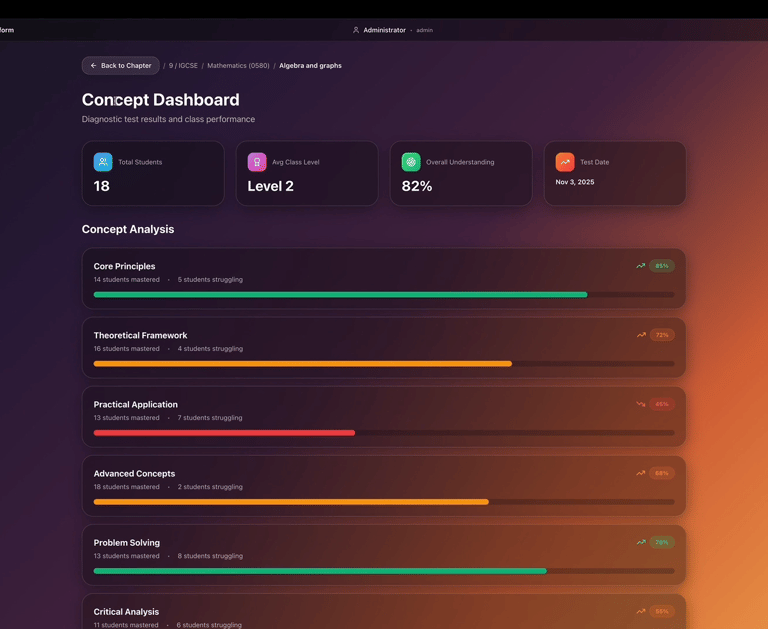
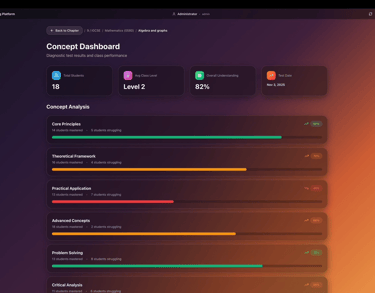
Supported by AI technologies and The Creator Education’s dedicated data centre infrastructure, the platform provides real-time academic analytics with graphical dashboards, enabling precise monitoring of conceptual understanding, experimental performance, and problem-solving progression. It is fully accessible to teachers, coordinators, and administrators in real time, even while students are being assessed in the classroom during problem-solving activities and IDEA pedagogy steps.
Additionally, the software includes advanced diagnostics and visual analytics with graphical representations of individual and cohort performance at every subtopic level. This enables instant identification of learning gaps, immediate academic intervention, personalised mentoring, and data-driven lesson execution, ensuring that teaching is continuously adapted to the cohort’s conceptual level and aligned with the PBL-TDLE teaching-learning architecture.
Diagnostics-Based CoPE-App (Premium Feature)
The platform uses advanced diagnostic tools, including KWL-based conceptual analysis, to evaluate the prior knowledge, learning gaps, and conceptual readiness of students for each subtopic. This ensures that teaching is not generic but scientifically tailored according to the cohort’s conceptual level.
One of the most powerful premium features of CoPE-App is its diagnostics-driven academic customization. Based on real-time diagnostic analysis, the system automatically selects the appropriate level of Concepts, Problems, Experiments, and Apparatus (CoPE) for each class. If students demonstrate higher conceptual understanding, the platform assigns advanced experiments, higher-order problems, and deeper investigative tasks. This adaptive academic architecture maximises student engagement, ensures higher-order thinking, strengthens research aptitude, and guarantees true concept mastery with measurable learning outcomes.
Concepts
CoPE-App systematically maps every subtopic of the curriculum into a structured set of core concepts that must be mastered before problem solving. These concepts are primarily derived from the curriculum and learning objectives prescribed by the respective boards and are aligned with international standards such as Cambridge, Olympiad, AP, and other research-oriented curricula, ensuring deep conceptual clarity rather than superficial coverage.
In addition, concepts are dynamically enriched during Step 1 (Identification) of the IDEA pedagogy, where students analyse given problems and tabulate the concepts they require, have missed, or are unable to recollect. This student-generated concept listing allows immediate academic responsiveness, as teachers can demonstrate those specific concepts on the spot, and students subsequently verify them through experiments and investigations in the Concept Lab.
Thus, the platform ensures that concepts are not merely explained but continuously demonstrated, investigated, and verified through structured academic processes within the PBL-TDLE architecture, making concept development both curriculum-aligned and learner-responsive
Real-life, Open-ended Problems
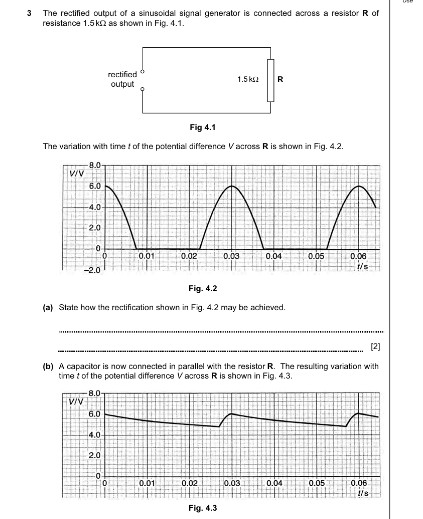
The system includes curated real-life and open-ended problem banks, including questions inspired by international past papers and higher-order assessments. These problems are designed to develop analytical thinking, application of concepts, and structured reasoning, ensuring that students regularly solve new-situation problems as a daily academic routine rather than only during examinations.
CoPE-App provides three progressive levels of problems for every subtopic. The first level is integrated within the IDEA pedagogy during classroom teaching, where students solve guided problems immediately after concept development through demonstrations and experiments. The second level consists of structured practice problems solved in the classroom itself, allowing immediate testing of problem-solving abilities just after experimental concept verification under teacher supervision.
The third level of advanced problems is assigned as home assignments, where students independently solve higher-order and open-ended problems and later present their solutions in the classroom for peer discussion and teacher review. During the IDEA problem-solving process, teachers award marks at each step—Identification, Development, Execution, and Assessment—and these performance indicators are entered into CoPE-App in real time. This enables instant analytics, continuous formative assessment, and precise tracking of each student’s problem-solving progression and conceptual application skills.
Experiments
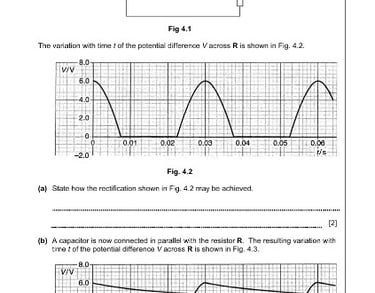
Thousands of experiments, designed over a period of 15 years by a research scientist from a leading national research institute and rigorously tested in Concept Labs, are embedded within CoPE-App for every subtopic in Physics, Chemistry, Biology, and Mathematics from Upper KG to Grade 12. These experiments comprehensively cover all concepts within each topic, ensuring that no concept remains theoretical or unverified.
Every student performs these experiments as an integral part of daily teaching and learning, ensuring active engagement and individual concept investigation rather than passive observation. Each experiment is structured for investigation and verification of concepts, where students conduct precise measurements, record and tabulate data, plot graphs, perform calculations and error analysis, interpret results, and draw logical conclusions. This systematic experimental participation guarantees that every concept is scientifically developed, tested, and mastered, forming a strong foundation for application and higher-order problem solving within the PBL-TDLE framework..
Apparatus
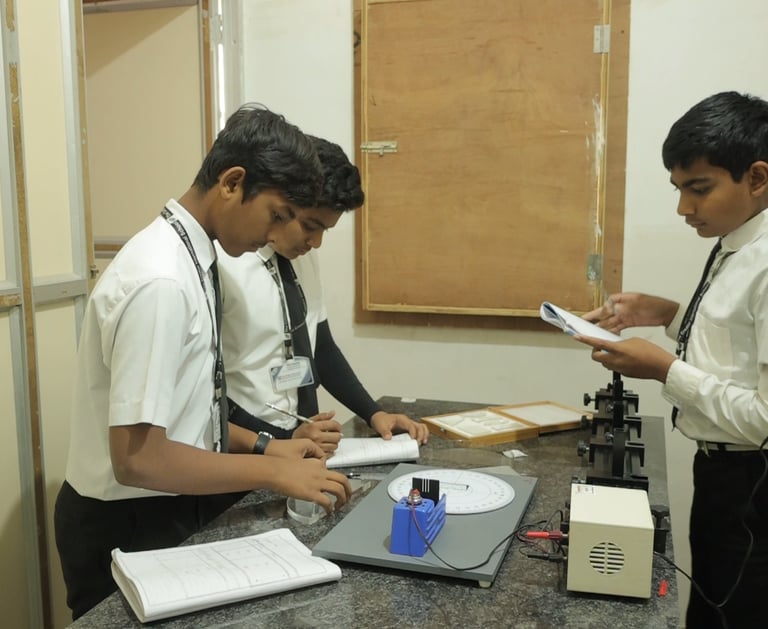
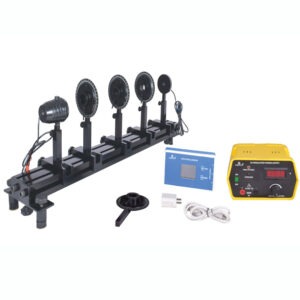
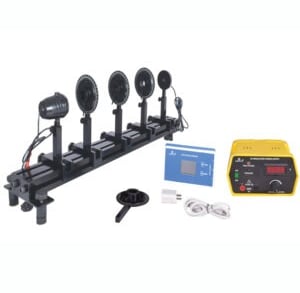
CoPE-App integrates hundreds of global-standard, state-of-the-art scientific apparatus required for each experiment and subtopic across Physics, Chemistry, Biology, and Mathematics. These apparatus are carefully selected based on the nature of problems, grade level, and the conceptual depth required for each cohort, ensuring age-appropriate yet academically rigorous experimental learning.
The software clearly specifies which apparatus to use, how to use it, and how each instrument supports concept investigation and verification. Every subtopic is supported by multiple experiments, and each experiment involves the use of diverse apparatus, exposing students to a wide range of scientific tools on a regular basis. This creates a dynamic and immersive Concept Lab environment where teaching is driven by demonstrations, experimental setups, real-time data, and graphical analysis rather than chalk-and-talk methods.
The presence of state-of-the-art apparatus enhances curiosity, engagement, and scientific thinking, as students experience the joy of discovering new instruments and their applications in learning every day. This continuous hands-on interaction keeps students fully engaged every minute, promotes active participation, and sustains a high level of academic focus, transforming the ultimate learning experience into an inquiry-driven and research-oriented process aligned with the PBL-TDLE framework.
Our office
Near DurgaShakti Foods Pvt. Ltd.
Sajanpuri, Khamgaon, M. S. 444303
Contacts
thecreator.school@gmail.com
9172221415 /16/18

Cultivating Global Problem-Solvers